
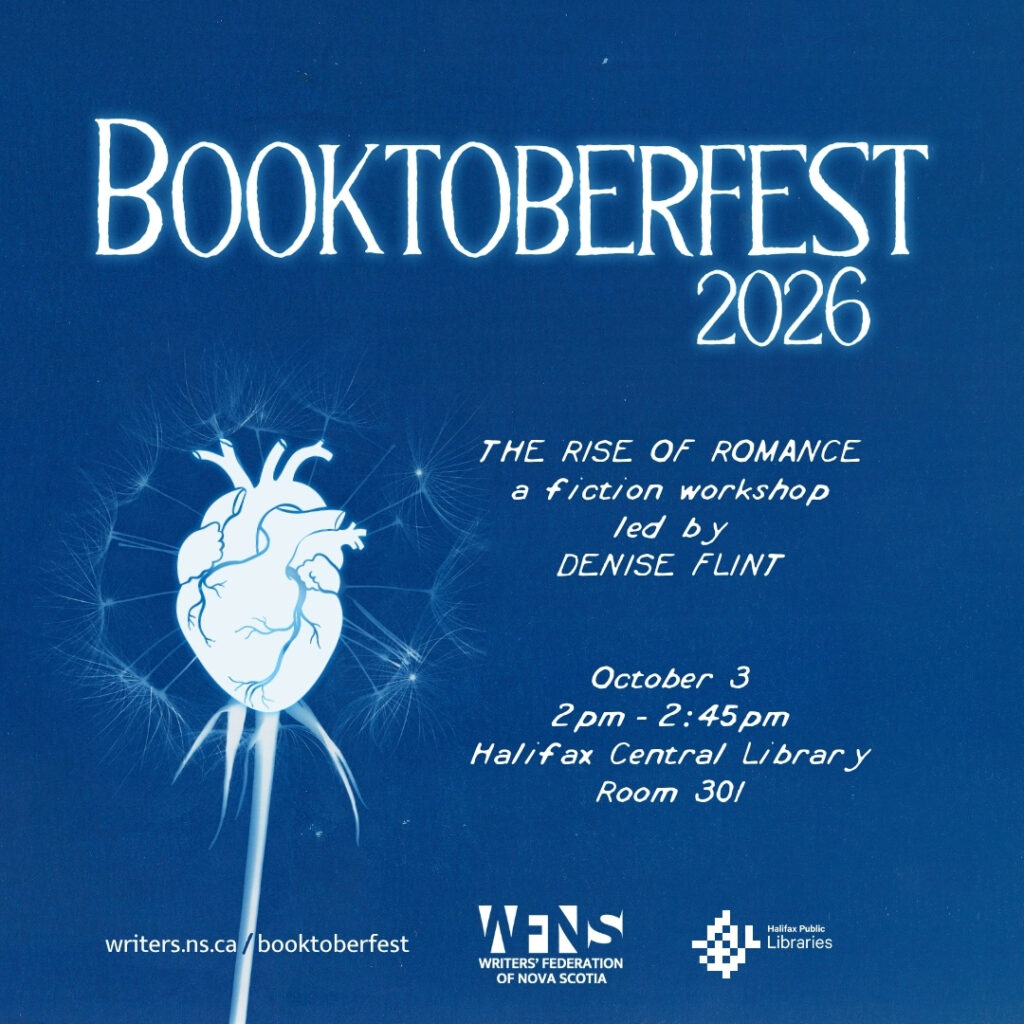
The Rise of Romance: a fiction workshop (Halifax) with Denise Flint

Romance novels: they account for the biggest piece of the publishing pie by far. No wonder! Some people have admitted to reading upwards of 50 romances a month, and very, very few readers have never read one (even if they won’t admit it). But what makes a story romance? Romeo and Juliet. Pride and Prejudice. Gone with the Wind. Outlander. They’re all famous love stories but are they all romances?

This workshop will look at what makes a book a romance, what the various sub-genres of romance are and why its popularity has not only lasted but grown. We will explore what makes romance different from other genres, why it’s frequently been reviled and dismissed, and whether it’s finally getting the respect it deserves.

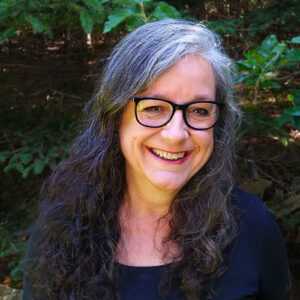
About the instructor: The first rejection Denise Flint ever received was from Harlequin. The letter explained that, while the novel she had submitted was well-written, it lacked heart. She went on to a career as a freelance journalist but never forgot her first foray into romance writing. After dusting off the old ambition and returning to her love of all things ending happily, she has had four romances published under the name Barbara Burke and one more, after a great deal of hesitation, under her own name. She continues to write nonfiction and fiction and does both, she hopes, with heart. She has learned her lesson.
Recommended experience level: All writers welcome (About recommended experience levels)

Participant cap: 30

Location: Room 301 (3rd floor), Halifax Public Library (5440 Spring Garden Rd, Halifax)
     Wheelchair-accessible venue with all-gender and gendered washrooms

Date & time: Saturday, Oct 3, 2026 (2:00pm to 2:45pm Atlantic)

Participation is free

Scroll to Top

Experience Levels

The Writers’ Federation of Nova Scotia (WFNS) uses the following terms to describe writers’ experience levels:

  • New writers: those with less than two years’ creative writing experience and/or no short-form publications (e.g., short stories, personal essays, or poems in literary magazines, journals, anthologies, or chapbooks).
  • Emerging writers: those with more than two years’ creative writing experience and/or numerous short-form publications.
  • Early-career authors: those with 1 or 2 book-length publications or the equivalent in book-length and short-form publications.
  • Established authors: those with 3 or 4 book-length publications.
  • Professional authors: those with 5 or more book-length publications.

Please keep in mind that each form of creative writing (fiction, nonfiction, poetry, writing for children, writing for young adults, and others) provides you with a unique set of experiences and skills, so you might consider yourself an ‘established author’ in one form but a ‘new writer’ in another.

Occasionally, WFNS uses the phrase “emerging and established writers/authors” to mean ‘writers and authors of all experience levels.’

The “Recommended experience level” section of each workshop description refers to the above definitions. A workshop’s participants should usually have similar levels of creative writing and / or publication experience. This ensures that each participant gets value from the workshop⁠ and is presented with info, strategies, and skills that suit their experience. 

For “intensive” and “masterclass” workshops, which provide more opportunities for peer-to-peer feedback, the recommended experience level should be followed closely.

For all other workshops, the recommended experience level is just that—a recommendation—and we encourage potential participants to follow their own judgment when registering.

If uncertain about your experience level with respect to any particular workshop, please feel free to contact us at communications@writers.ns.ca