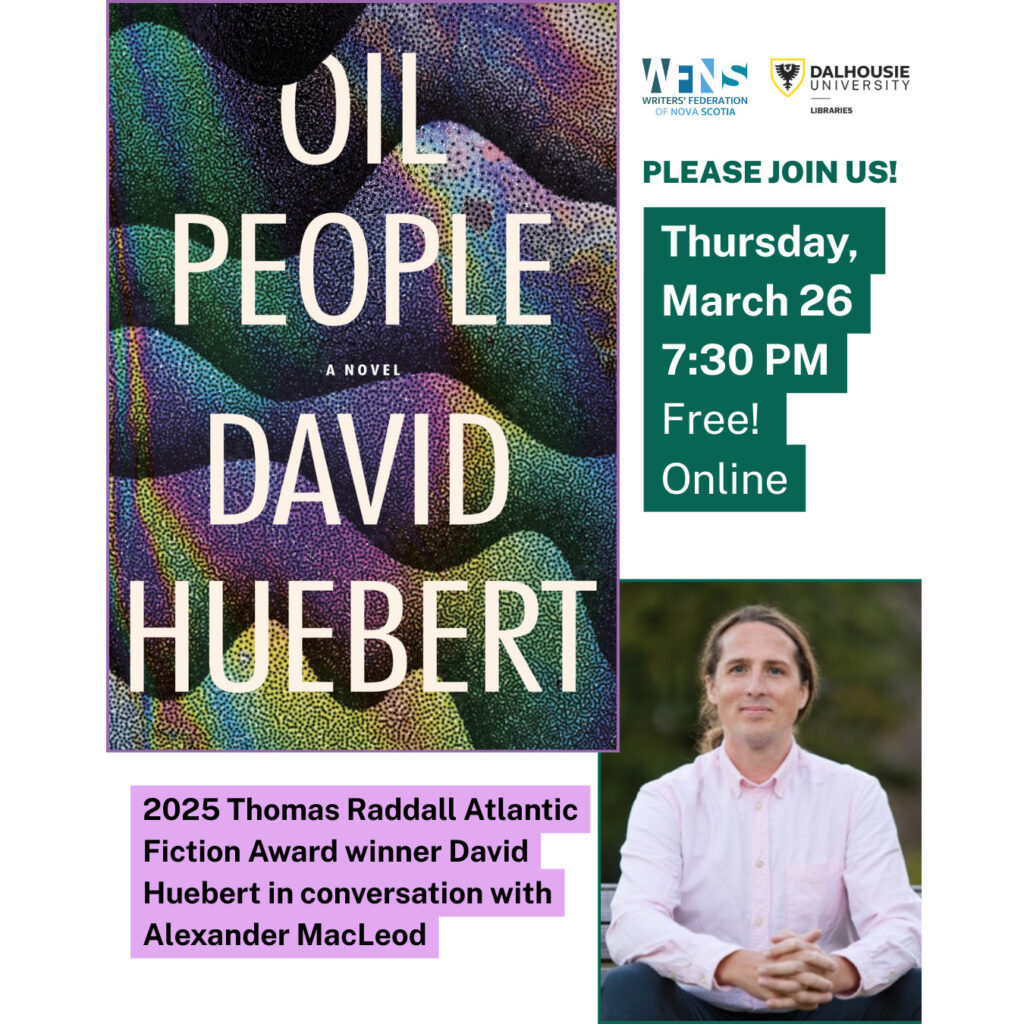
Raddall Reading: David Huebert in Conversation with Alexander MacLeod (virtual)
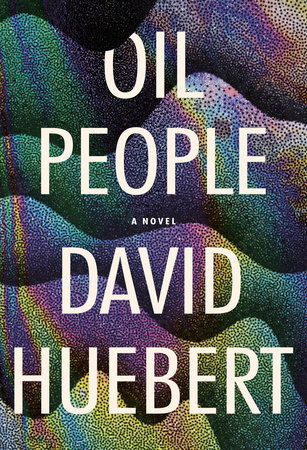
David Huebert, author of the Thomas Raddall Atlantic Fiction Award-winning novel Oil People, sits down with Alexander MacLeod, author of Light Lifting and Animal Person, to discuss writing, fiction, storytelling, and the impact of the Raddall award.
Presented by the Writers’ Federation of Nova Scotia in partnership with Dalhousie Libraries.
Location: Zoom webinar
Date of public reading: Thursday, March 26, 2026 (7:30pm to 9pm Atlantic)
Attendance is free, but pre-registration is required
Part generational saga, part eco-gothic fable, Oil People is a luminous debut novel about history and family, land and power, and oil as an object of toxic wonder.
1987: Thirteen-year-old Jade Armbruster lives with her parents and older sister on the family’s vintage oil farm—a decrepit property built by her ancestor. As her parents fight about whether to sell the land and their failing business, Jade struggles to avoid her best-friend-turned-nemesis and vies for the attention of the enigmatic farmer boy. Meanwhile, the oil swirling beneath her family’s home provokes erratic behaviours and offers murky revelations about her family’s history on this land.
1862: Clyde Armbruster catches his big break, striking Lambton County’s first gusher. The discovery brings wealth and opportunity to him and his wife Lise, but his daily proximity to oil leaves him infertile and may be the cause of his alarming, otherworldly visions. At the same time, Clyde and Lise develop an alliance with their eccentric and wealthy neighbours, a relationship that promises even more success until a fateful moment intertwines the two families, locking them into a bitter rivalry that lasts generations.
As the two narratives coalesce, family secrets and deceits are slowly unveiled, and the slick spectre of oil seeps off the page, revealing a landscape smeared and stained, yet persistently alive. Intense and visceral, agile and lyrical, Oil People is a molten mirror for the petroleum age, and signals the arrival of a profound and vital voice.
(Synopsis courtesy of publisher Penguin Random House)