

Foundations of Nonfiction (virtual) with Tina Capalbo, Andrea Currie, & Darryl Whetter
Foundations of Nonfiction presents three authors’ approaches to the craft of creative nonfiction, coordinated to introduce new and emerging writers—including those who’ve already published a few personal essay—to fundamental concepts, a variety of tried-and-tested techniques, and the unique perspectives of the collaborating instructors.
In this edition of Foundations of Nonfiction, participants will revisit the fundamentals of storytelling, receive coaching in creativity, and explore some of the vibrant writing opportunities best suited to creative nonfiction, including voice, documentary work, thematic braiding, and playing with form. Throughout, participants will engage in writing exercises and have opportunities to give and receive peer feedback.
- Weeks 1 – 3 (led by Darryl Whetter) will revisit storytelling fundamentals and the power of writing in dramatic scenes. These introductory weeks will include some of the unique aspects of creative nonfiction (including voice and nonfiction plot).
- Weeks 4 – 6 (led by Tina Capalbo) will introduce “life writing” techniques to explore memory (uncovering story ideas and recurring themes using a variety of prompts); to shape experiences with a clear narrative structure (including a timeline of turning points and a three-part model for starting any story); and to build scenes (using showing, telling, and dialogue to reveal character & relationships).
- Weeks 7 – 9 (led by Andrea Currie) will address the importance of purpose (the “deeper why”); clarifying our questions; Indigenous approaches to form; memoir as a portal to narrative nonfiction; and the role of writing in transformational change in our communities and the world.
About the instructors:
Tina Capalbo is an author, writing teacher, and story untangler who helps creative nonfiction writers structure their life stories into powerful narratives. Her own writing journey bridges the precise and the poetic—from architectural proposals and teaching guides to children’s books and memoir writing. As a veteran online teacher with a B.Ed. (Western), an M.A. in English (Dalhousie), and over 5,000 online classes under her belt since 2021, Tina focuses on practical writing techniques and guides through Socratic dialogue (which she fondly calls “all the pesky questions!”) to build understanding, sharpen skills, bolster confidence, and help writers explore their narrative voice.

Andrea Currie is a mother, writer, psychotherapist, musician and a proud member of the Red River Métis Nation from the traditional homeland of the Métis in southern Manitoba, who has been living and working in Mi’kmaki for many years. She believes that stories are medicine, and that healing ourselves and our relationships with All Our Relations has never been more important than it is now. She weaves words into pathways to self-discovery, critiquing the colonial systems that oppress us, finding wisdom and guidance in the teachings of our Elders and ancestors. In Finding Otipemisiwak: The People Who Own Themselves, Currie retraces her journey as a child born into a lineage of leaders, warriors, and artists, removed from her family and culture and placed in white middle-class home that never felt right, to leaving that place and finding her way home to her family, her culture, and herself. Andrea works with the Kiknu Centre as the Indigenous therapist at St. Francis Xavier University and has a private practice working with Mi’kmaw and Wolastoqiyik individuals throughout Mi’kmaki. Andrea has also been the facilitator and therapist for the We’koqma’q Residential School survivors for the past 22 years.
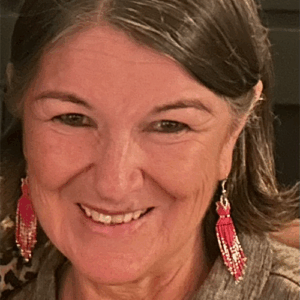
Darryl Whetter is the author of ten books of fiction, poetry and creative nonfiction. His most recent books are the climate-crisis novel Our Sands, from Penguin Random House (2020), and the anthology Teaching Creative Writing in Canada, from Routledge (2025). His writing has been selected to Best Canadian Essays, Best Canadian Stories and Best Asian Short Stories. His essays have been published by The Globe and Mail, The Detroit Times, The Brooklyn Rail, THIS Magazine, Oxford University Press, Presses Sorbonne Nouvelle, et cetera. He has been a festival or campus author in Bali, Singapore, London, Penang, Swansea, Perth, Sydney and throughout his native Canada. Other recent books include the 2023 poetry collection #Travelsend: Poems at Travel’s End and, from Routledge, Teaching Creative Writing in Asia (2022).

Recommended experience level: New and emerging nonfiction writers, including those who are more experienced in other forms (About recommended experience levels)
Participant cap: 15
Location: Zoom
Dates of 9-week workshop: Sundays, Jan 18 & 25 + Feb 1, 8, 15, & 22 + Mar 1, 8, & 15, 2026 (1:00pm to 3:00pm Atlantic)
Registration for 2026 General Members: $299
Registration for non-members: $364 (includes 2026 General Membership in WFNS)
Registration for this workshop is closed