
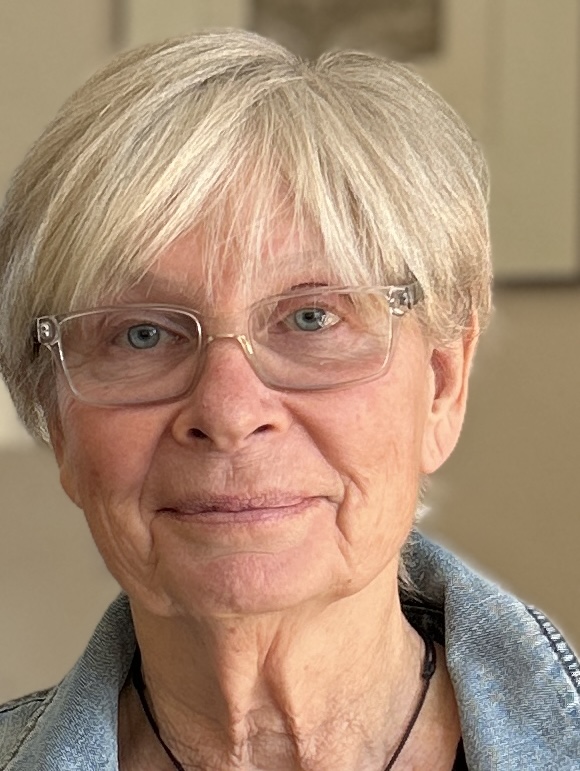
Judith Meyrick
Judith’s writing has appeared in various publications in both Canada and New Zealand. Her articles and essays appear in the NZ Listener, the NZ Woman’s Weekly, Pandora Publishing, The Avondale Press, Atlantic Books Today, the Landscape Architectural Review and the Canadian History Association magazine. For about three years, she wrote a book review column for the Halifax Herald which are collected here at reviewbites2.blogspot.com. Her children’s book, Gracie the Public Gardens Duck (Nimbus 2007), won Best Published Book and Best Illustrated Book at the Atlantic Book Awards. Most recently, she wrote an essay which appears in Dwelling on the Margins of History (Bloomsbury, 2025).
She returned to university in 2019, graduating in 2023 with an Honours BA and, in 2024, with a master’s, both in history. Her master’s thesis researched a little acknowledged 1911 amendment to the Indian Act.
She is currently researching and writing a non-fiction book which links Scotland, Nova Scotia and New Zealand in a fascinating history of migration and adventure. After university, she moved to Ottawa to be near her daughter and grandchildren.
PUBLICATIONS
“Denying Home: Canadian Exceptionalism and Indigenous Relocation,” in From the Margins: Reimagining global perspectives of home. Ed: Dr. Lisa Binkley, Department of History, Dalhousie University, Halifax, Nova Scotia. (Bloomsbury, 2025). Using the perspectives of displaced, colonized, and disenfranchised groups, these essays explore ideas of home from beyond the mainstream.
“The People Next Door,” in Intersections, Canadian History Association (CHA), Summer 2025. This essay traces the parliamentary evolution of the 1911 Indian Act amendment which removed land security for Indigenous reserves in Canada that were close to urban centres.
Gracie, The Public Gardens Duck (Nimbus, 2007). A children’s book about a fictional duck living in the Halifax Public Gardens. Gracie won “Best Atlantic Published Book” and the “Lillian Shepherd Memorial Award for Illustration” at the 2008 Atlantic Book Awards and remains on the recommended book list for children at the Cornell Lab of Ornithology at Cornell University, N.Y. https://celebrateurbanbirds.org/resources/recommended-books-and-articles/
I wrote a monthly book review column for the Halifax Herald from 2007-2009 which are posted on my blog at https://reviewbites2.blogspot.com/ (ctrl+click on link).
Other works have appeared in various publications including The New Zealand Listener and the New Zealand Woman’s Weekly, Pandora Publishing, the Avondale Press, Atlantic Books Today, Landscape Architectural Review, and the Canadian Historical Magazine.
AWARDSGracie, the Public Gardens Duck – Best Published Book and Best Illustrated Book, Atlantic Book Awards, 2007.
SSHRC Grant 2023, used to pursue a master’s degree at Dalhousie University.
Fellowship 2024, Dalhousie University. A travel grant for thesis research.