

2026 Ellemeno Prize finalists
Congratulations to the four artists and writers named as finalists for the 2026 Ellemeno Visual Literature Prize: Shelagh Howard, Basma Kavanagh, Gabriel Milhet, and Rebecca Wilson.
The annual Ellemeno Prize celebrates creative cross-pollination between the literary arts and the visual arts. The selected writer or artist receives a cash prize ($250) along with digital publication of their work and a featured interview on the Writers’ Federation of Nova Scotia website.
The 2026 Ellemeno Prize recipient will be announced on March 12.
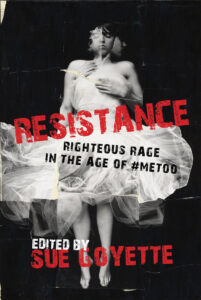
Finalist Shelagh Howard’s long-exposure photo series, The Secret Keepers, responds to the poetry anthology Resistance: Righteous Rage in the Age of #Metoo (University of Regina Press, 2021), edited by Sue Goyette.
Shelagh Howard (b. 1971) is an award-winning photo-based visual artist whose work delves into the layered terrain of selfhood, interrogating themes of gender, trauma, vulnerability, intimacy, and isolation. With an unflinching gaze, she peels back the surfaces of constructed identity to reveal the tenderness beneath. Her images thread motion and stillness, capturing the ephemeral shadows of the self and offering a fleeting glimpse of what lingers behind our carefully assembled facades. She studied psychology at The University of Toronto and photography at Ryerson University. She lives, works and befriends crows in Halifax, Mi’kam’ki, Nova Scotia.
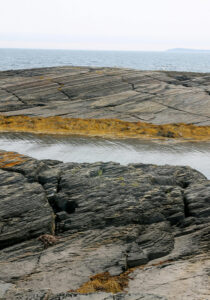
Finalist Basma Kavanagh’s textile work, Untitled (Tidelines embroidery), responds to an unpublished short poem by fellow Nova Scotian poet Sean Howard.
Basma Kavanagh is a Lebanese Canadian artist whose multidisciplinary practice includes writing, drawing, printmaking, artist’s books, textiles, land-based explorations, performance, and scholarly work. She has published three volumes of poetry, Ruba’iyat for the Time of Apricots (Frontenac House, 2018), Niche (Frontenac House, 2015) and Distillō (Gaspereau Press, 2012). She has an MFA in Creative Nonfiction from University of King’s College, Halifax, and her nonfiction work has been recently anthologized in Best Canadian Essays 2026. She currently lives in Nova Scotia, in the Kespukwitk region of Mi’kma’ki.
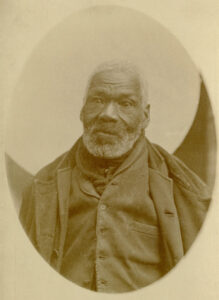
Finalist Gabriel Milhet’s poem, “Researching the Life of Gabriel Hall (to 1824): Farmer, Freedom Fighter, and a Black Refugee of The War of 1812,” responds to a photographic portrait of Gabriel Hall (1892) taken by photographer George H. Craig.
Gabriel Milhet is an African Nova Scotian writer. He is a winner of the 2025 Varma Prizes in Gothic Literature. His research appears in Intersections and Canada’s History and is forthcoming in The Canadian Encyclopedia and Findings / Trouvailles. His poetry is forthcoming in The White Wall Review and The South Shore Review.
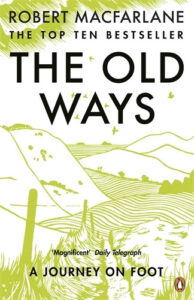
Finalist Rebecca Wilson’s watercolour painting, Desire Paths, responds to Robert McFarlane’s The Old Ways: A Journey on Foot (Penguin Books, 2012).
Rebecca Wilson is an artist from Bedford, Nova Scotia, who works primarily with watercolour paint. Working in an illustrative and folk-art inspired style, she engages with themes of memory, community, and nostalgia in her art. Her background in academic research comes through in the theses of her paintings, which often engage in conversation about history, literature, and personal identity as it ties into time and place.